Ground-Mounted Solar Panels: A Complete Guide
With rising energy costs, more homes and businesses are considering solar installation to generate renewable electricity and help fight climate change. Today, rooftop solar panels are a common sight across Ireland, but ground-mounted solar panels are also emerging as a viable alternative.
This can be the case for properties that have sufficient outdoor space or in situations where rooftop installation is not feasible. This guide will explain how ground-mounted solar panels function, their advantages, installation and maintenance, as well as how they compare with rooftop panels. It will also cover:
- Ground-mounted solar panel costs
- Planning permission requirements
- Available solar grants
- Selling excess electricity back to the grid
Ground-mounted solar panels at a glance
- Installation: Ground-mounted panels are installed on a supporting structure rather than a roof.
- Cost: They can cost more than rooftop systems because of mounting, foundations and groundworks.
- Grants: Eligible homeowners can receive up to €1,800 through the SEAI Solar PV Grant in 2026.
- Planning: Domestic installations may be exempt from planning permission where the relevant conditions are met.
- Maintenance: Ground-level positioning can make panels easier to access for cleaning and maintenance.
- Grid export: Excess electricity can be exported to the grid, with eligible customers receiving payment through the Clean Export Guarantee.
What are ground-mounted solar panels?
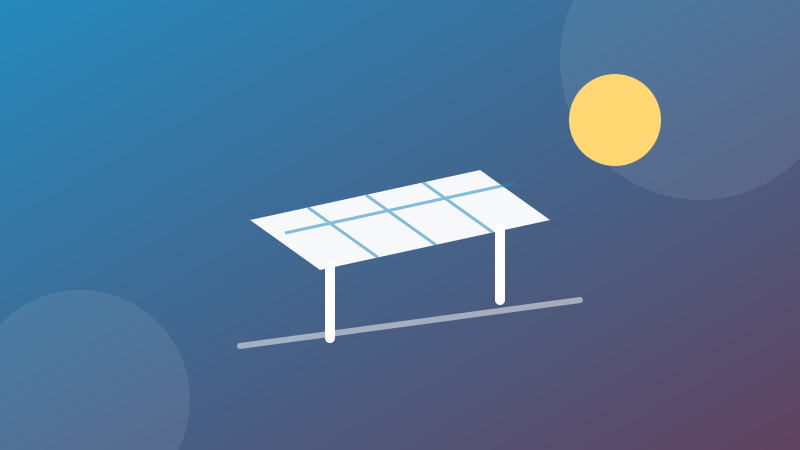
Ground-mounted solar panels are solar PV panels that are installed on a supporting frame on open ground rather than on the roof of a building. The panels are secured to a mounting structure that allows them to be positioned at an appropriate angle to capture sunlight.
Similar to rooftop panels, they convert sunlight into electricity and can be a good option for homes, farms and businesses that do not have sufficient suitable roof space for solar PV. While ground-mounted systems are commonly associated with farms and businesses, homeowners can also install residential ground-mounted solar panels where there is sufficient outdoor space available.
What are the benefits of ground-mounted solar panels?
Ground-mounted solar panels offer several advantages, especially for properties with sufficient available land. One of the main benefits is the flexibility to position the panels at a suitable angle and orientation to maximise their exposure to sunlight. Unlike rooftop solar panels, their positioning is not determined by the existing angle or orientation of a roof.
Another advantage is the added accessibility provided by ground-mounted solar panels. The panels are generally easier to access for cleaning, maintenance, and repairs than rooftop solar panels. Their open positioning can also allow greater airflow around the panels.
A ground-mounted system also avoids installing panels and mounting equipment directly on the roof. This can make it an attractive alternative for homes, farms, or businesses where the roof is unsuitable for solar panels or where the owner would prefer not to use the available roof space.
How are ground-mounted solar panels installed in Ireland?
Installing solar panels on the ground involves securing the panels to a series of supporting poles or frames. First, a site assessment is carried out to determine whether the location is suitable for a ground-mount installation.
Ground conditions may need to be examined to ensure they can support the foundations, while the proposed orientation of the panels is assessed to maximise their exposure to sunlight. A supporting structure is then installed and secured to the ground. The type of mounting system used will depend on factors such as the size of the installation and the conditions of the site.
Once the supporting structure is in place, the solar panels are fixed to the mounting system and positioned at an appropriate angle and orientation. Finally, the completed system is tested and commissioned to ensure that it is operating correctly.
How do you maintain ground-mounted solar panels?
Ground-mounted solar panels generally require relatively little maintenance. One advantage of installing solar panels at ground level is their accessibility. Compared with rooftop panels, they are generally easier to reach for routine inspections, cleaning, and repairs without having to access the roof.
The area surrounding the installation should also be maintained. Grass, weeds and other vegetation should be kept under control to prevent them from growing around the structure or potentially shading the panels. Leaves, dirt and other debris can also build up on the surface of the panels over time and may need to be removed when necessary.
It is also important to check the wider system and not just the panels themselves. The mounting structure, electrical components, and cabling should be inspected as required to identify any signs of damage or deterioration. Periodic professional inspections can help identify potential faults and ensure the system continues to operate safely and effectively.
How much do ground-mounted solar panels cost in Ireland?
The cost of ground-mounted solar panels can be higher than comparable rooftop systems, as a ground-mounted installation may require additional labour and equipment. While the solar panels themselves may be similar, a secure mounting frame and foundations are required rather than using an existing roof.
Groundworks may also need to be considered when calculating ground solar panel costs. Depending on the location of the system, cables may need to be run underground between the solar panels and the property. Longer cable runs, more complex ground conditions and additional installation work can all contribute to the overall cost.
The final price will depend on several factors, including the size of the system, site conditions, mounting requirements and the distance between the property and the ground-mounted solar panels. Eligible homeowners may be able to reduce some of the initial cost through the SEAI Solar PV Grant, which is discussed in more detail below.
Do ground-mounted solar panels need planning permission in Ireland?
Following updates to Ireland's Planning and Development Regulations in October 2022, there are fewer restrictions surrounding planning permission for solar panels. However, certain conditions still have to be met for a ground-mounted installation to qualify for exemption from planning permission.
For a free-standing solar installation within the grounds of a house, the total aperture area of the panels must not exceed 25 m². The installation must also be no more than 2.5 metres high at its highest point. Once the panels have been installed, at least 25 m² of private open space must remain to the rear or side of the property.
There may also be additional restrictions in certain circumstances, including requirements relating to protected structures, Architectural Conservation Areas and potentially hazardous glint or glare. Homeowners should therefore check that their proposed ground-mounted solar panel installation meets all relevant planning requirements before beginning any installation work.
Are grants available for ground-mounted solar panels?
You can reduce the cost of an eligible solar PV installation with financial support from the Sustainable Energy Authority of Ireland (SEAI). In 2026, the SEAI Solar PV Grant provides funding of up to €1,800 towards an eligible domestic solar PV installation. The amount available depends on the size of the solar PV system, as outlined below.
| Solar PV system size | Grant amount |
|---|---|
| Up to 2 kWp | €700 per kWp |
| Additional capacity from 2 kWp to 4 kWp | €200 per kWp |
| Maximum grant available | €1,800 |
Homeowners considering ground-mounted solar panels should ensure that their proposed system meets the terms and conditions of the scheme before proceeding. Current eligibility requirements include the property having an MPRN, being built and occupied before 2021, and not having previously received SEAI grant support for solar PV at that MPRN. The work must also be completed by an SEAI-registered solar PV company.
It is also important to apply for the grant and receive approval before installation work begins. Applicants can check the full eligibility criteria, application process and latest grant amounts through the SEAI Solar Electricity Grant page.
Can you sell excess electricity back to the grid?
If your ground-mounted solar panels generate more electricity than your property requires, the excess electricity can be exported to the national grid. In Ireland, eligible microgeneration customers can receive payment from their electricity supplier for exported electricity under the Clean Export Guarantee (CEG).
The solar PV system must first be registered with ESB Networks. This is usually handled by the installer using an NC6 or NC7 form, depending on the size and type of the installation. Once the system has been processed, ESB Networks will inform the electricity supplier.
For customers with a smart meter, the amount of electricity exported to the grid can be measured automatically. The electricity supplier can then pay the customer for each metered kilowatt-hour (kWh) exported. Payment will typically appear as a credit on the customer's electricity bill, although the exact payment rate and arrangements can vary between electricity suppliers.
Are ground-mounted solar panels right for you?
In conclusion, ground-mounted solar panels can be a very good option for a home if there is sufficient space available. Due to their ease of access and increased flexibility compared with rooftop panels, they can also be easier to maintain.
However, consideration must also be given to cost, available space and planning requirements. Homeowners should assess their property and consult a qualified solar installer before deciding whether a ground-mounted system is right for them.
Thinking about a ground-mounted system?
Free quotes from vetted, SEAI-registered installers covering every county in Ireland, with grant guidance included.
Get a Free Quote Explore SEAI Grants